

Why Keeping a Caregiver Journal Matters for PCAFC
If you’re applying for the VA’s Program of Comprehensive Assistance for Family Caregivers (PCAFC), one of the most important tools you can have is a caregiver journal. It’s not busywork—and it’s not about writing perfectly. It’s about capturing the real work you do every day so it can be clearly understood during the application and interview process. Many caregiving tasks become second nature over time. You do them automatically, without thinking. But during the PCAFC application, you’ll be asked to explain exactly what you do, and that’s harder than it sounds when you’re on the spot. That’s where a journal makes all the difference.
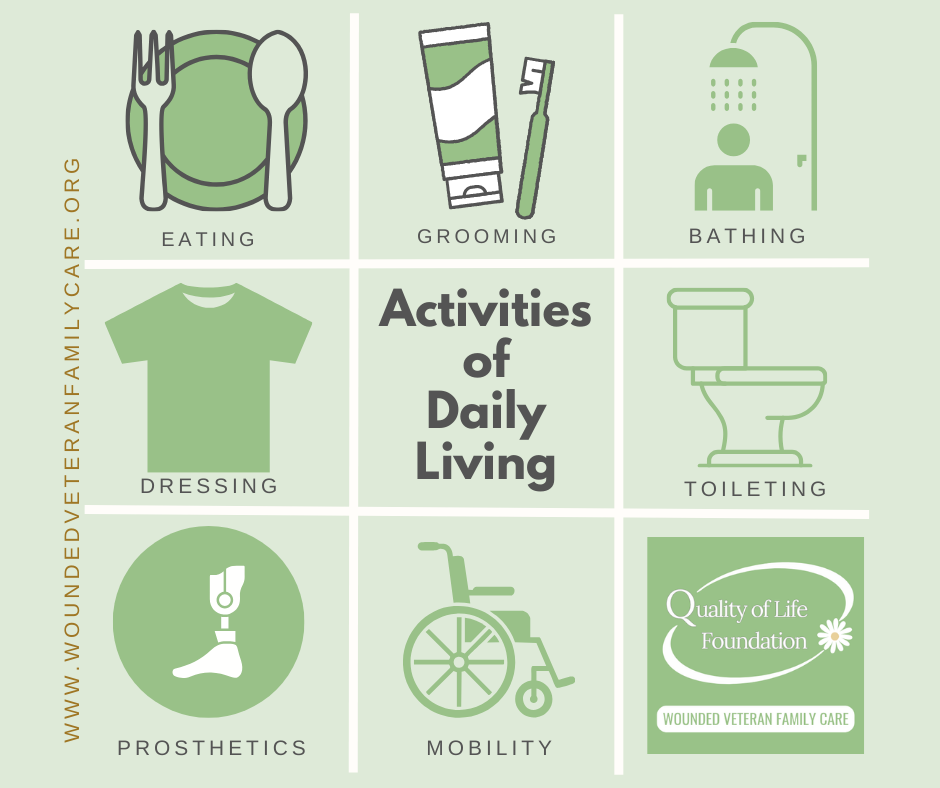
During the application process, you and your veteran will go through several interviews, including the Veteran’s Functional Assessment Instrument (VFAI). Personnel from the VA Caregiver Support Program (CSP) will interview both of you and ask detailed questions about how you assist with:
Your answers during these interviews are considered subjective and they are based on what you describe. The clearer and more detailed you are, the more accurately the VA can assess your caregiving role.
How to Start Your Caregiver Journal
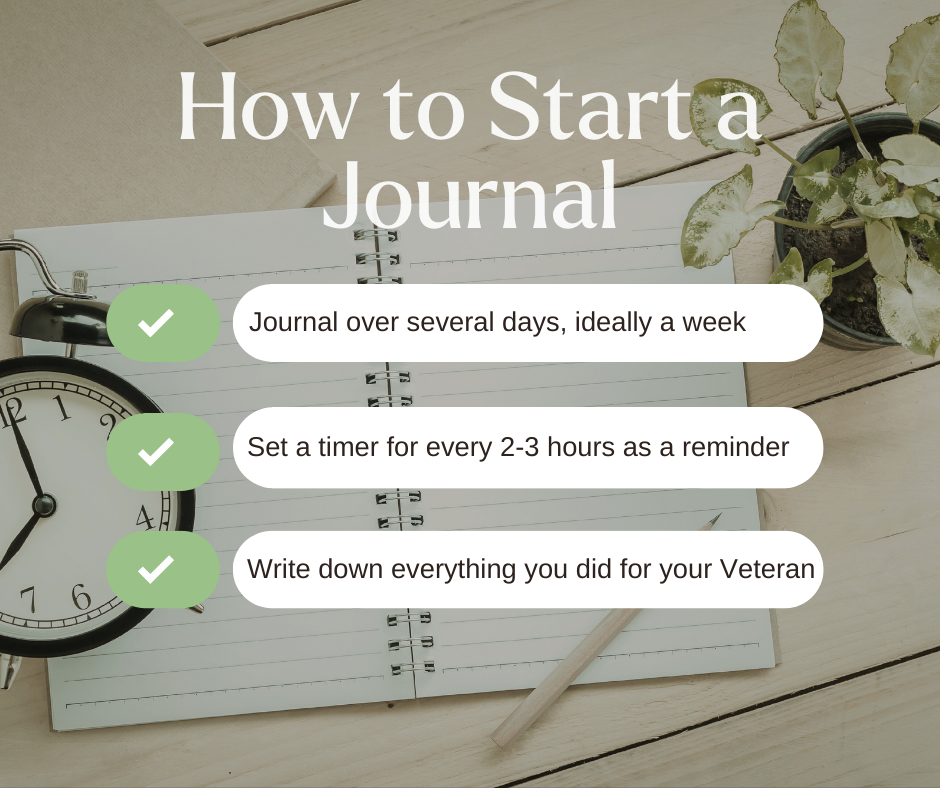
Many caregiving tasks become second nature over time. You do them automatically, without thinking. But during the PCAFC application, you’ll be asked to explain exactly what you do, and that’s harder than it sounds when you’re on the spot. You may be surprised by how much you actually do once it’s all written down.
What to Record for Every Task
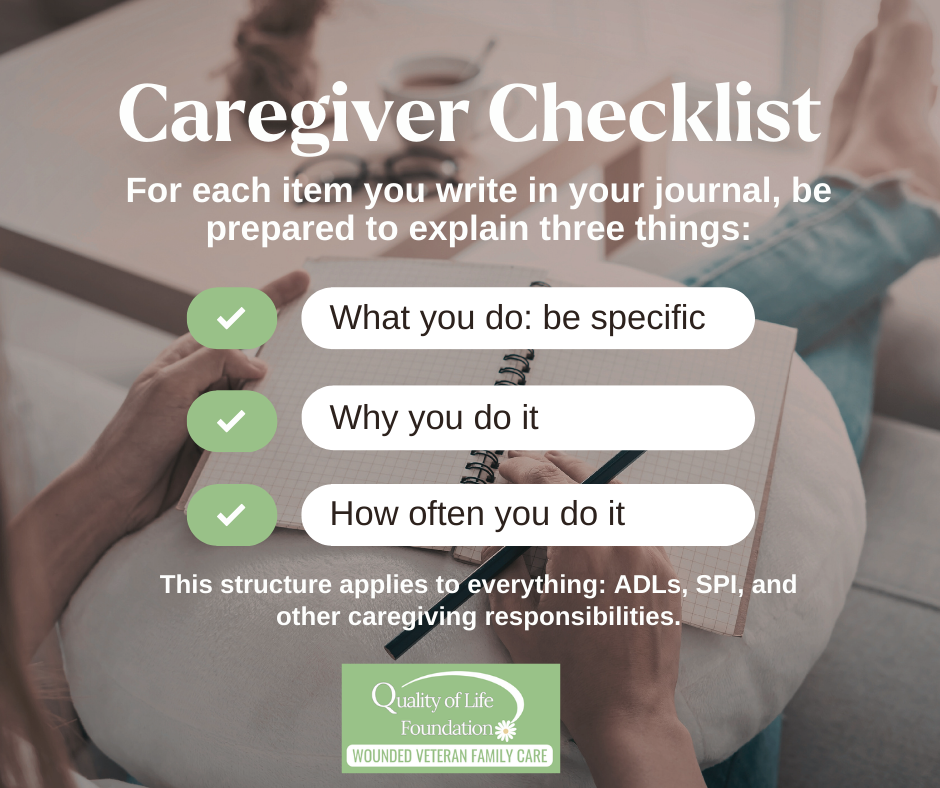
For each item you write in your journal, be prepared to explain three things for each ADL, SPI, and other caregiving tasks:
- What you do: be specific
- Why you do it: what condition or symptom makes it necessary
- How often you do it: Every time? Daily? Weekly? etc.
This level of detail helps the interviewer understand not just that you help, but why your help is required.
Strong, Clear Descriptions Matter

Instead of saying: “I help with meds.”
Try something like: “I manage eight medications for my husband. He cannot remember when or how to take them due to a TBI and short-term memory loss. I set them up in a daily pill organizer and give reminders every morning and night. I also monitor for side effects or missed doses.”
This type of explanation paints a clear, accurate picture of your caregiving role.
Pair Your Journal With Medical Evidence
Your journal and interviews are subjective—so strengthen them with objective medical evidence. When medical records and caregiver descriptions align, it reinforces the reality of your veteran’s needs.
How the VA Uses Your Descriptions
For Activties of Daily Living
During the VFAI interview, CSP personnel will ask what assistance you provide for each ADL. Your answers during these interviews are considered subjective and they are based on what you describe. This is where your journal comes in handy. The clearer and more detailed you are, the more accurately the VA can assess your caregiving role. Based on what you describe, a CSP nurse will assign a level of functioning for your veteran. These levels include:
- Independent (no help)
- Setup/Clean-up assistance
- Supervision/touching assistance
- Partial assistance (you provide less than half the effort)
- Substantial assistance (you provide more than half)
- Dependent (you do all the work)
- Special categories such as refused, not attempted, or not applicable
Supervision, Protection, or Instruction
For Supervision, Protection, or Instruction (SPI), the VA now requires that the caregiver provide regular daily care. This means providing occasional reminders are not enough and irregular help does not meet the threshold. There must be a consistent, daily need related to Supervision, Protection and Instruction and your journal should clearly show this pattern of daily involvement. Read more about SPIs here.
It’s crucial that your explanation matches what you actually do. These designations directly impact the level of support your veteran may qualify for under PCAFC.
Final Thought
Your caregiving matters, and it deserves to be fully understood. A simple journal can help ensure that nothing you do gets overlooked, minimized, or forgotten during the PCAFC process.
You’re not exaggerating. You’re documenting the truth. And that truth is what helps the VA make informed decisions about support for you and your veteran.